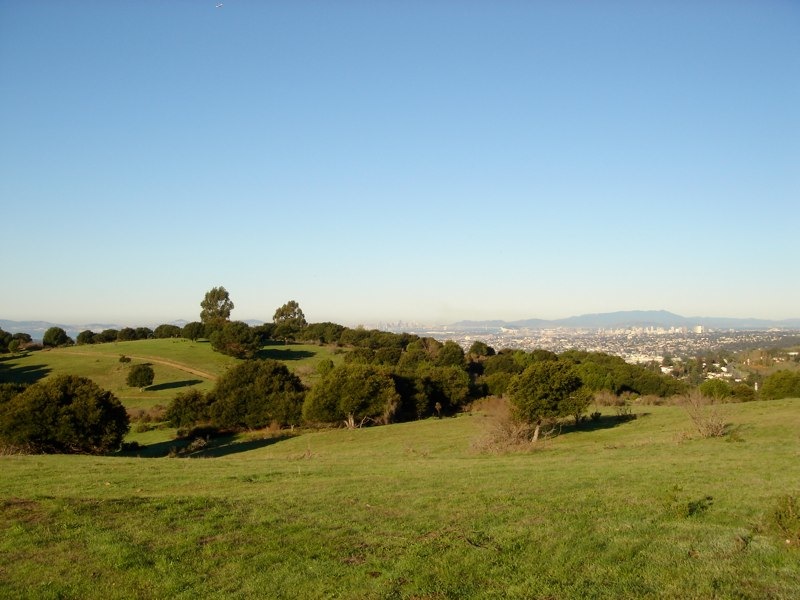
 Knowland Park is a 500-acre wildland open space in the Oakland hills, deeded to the City by the State in the 1970′s under the condition that it would always remain a public park.
The largest and most pristine portion of the park is undeveloped, and yet is the most accessible to park users. The western highlands and northern slopes are currently a thriving hotspot for rare native plants and wildlife. Some of the natural highlights of the park include rare native plant communities, thriving but threatened wildlife, choice bird-watching locales, and a known-critical migratory corridor for mountain lions and bobcats.
The Oakland Zoo occupies the developed western lowlands of the park, just off I-580. The park is now gravely threatened by the ill-conceived development plans of Zoo executives. Its proposed development would sever the richest habitat from the rest of the park, and fence out the public and wildlife.
Knowland Park is a 500-acre wildland open space in the Oakland hills, deeded to the City by the State in the 1970′s under the condition that it would always remain a public park.
The largest and most pristine portion of the park is undeveloped, and yet is the most accessible to park users. The western highlands and northern slopes are currently a thriving hotspot for rare native plants and wildlife. Some of the natural highlights of the park include rare native plant communities, thriving but threatened wildlife, choice bird-watching locales, and a known-critical migratory corridor for mountain lions and bobcats.
The Oakland Zoo occupies the developed western lowlands of the park, just off I-580. The park is now gravely threatened by the ill-conceived development plans of Zoo executives. Its proposed development would sever the richest habitat from the rest of the park, and fence out the public and wildlife.
About the Park
Knowland Park is a 500-acre wildland open space in the Oakland hills, deeded to the City by the State in the 1970′s under the condition that it would always remain a public park.
The largest and most pristine portion of the park is undeveloped, and yet is the most accessible to park users. The western highlands and northern slopes are currently a thriving hotspot for rare native plants and wildlife. Some of the natural highlights of the park include rare native plant communities, thriving but threatened wildlife, choice bird-watching locales, and a known-critical migratory corridor for mountain lions and bobcats.
The Oakland Zoo occupies the developed western lowlands of the park, just off I-580. The park is now gravely threatened by the ill-conceived development plans of Zoo executives. Its proposed development would sever the richest habitat from the rest of the park, and fence out the public and wildlife.
 Follow
Social Media
 |
 |
 |